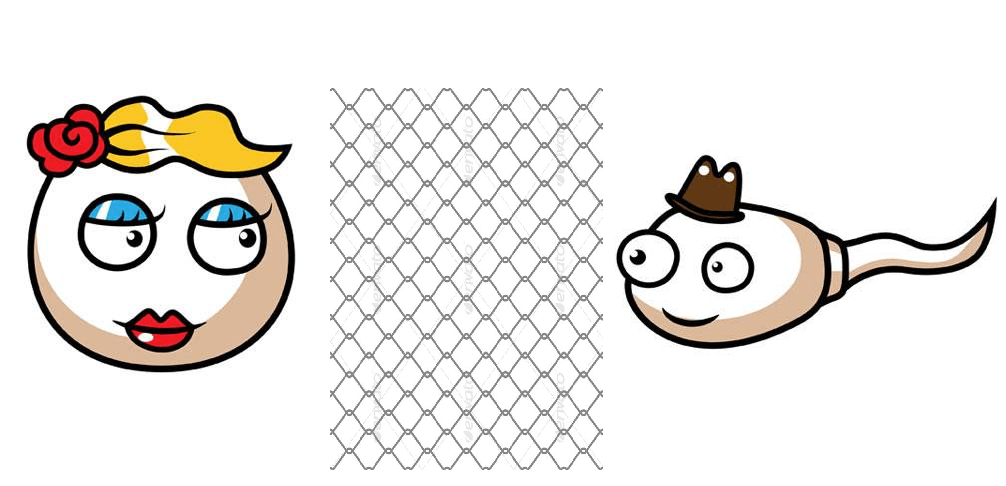
A recent executive order signed by the US president would not allow any foreign non-profits that receive health funds from the US to use it for providing abortion services (1) . This order which was signed by a man surrounded by men, re-started highly polarized debates and opinions on the role of government in limiting access to methods of birth control and a woman’s right to safe abortion. Women bear the emotional and physical consequences of reproductive decisions that they often unfortunately don’t get to make. Let us for a minute shine the focus light on men and their role in reproductive control. What if there is a procedure that allows for men to contribute to birth control in a big way? There has been considerable interest in the pharmaceutical industry to produce a male contraceptive pill. Although pills are a profitable bet for the pharma industry, they are a pain for the users. You need to remember to take them every day, worry about side-effects however minimal they are made out to be, and the physical consequence of forgetting to take one will overwhelmingly fall on the woman. Vindicating some of these points, the most recent clinical trial met with an unhappy ending as some men participating in the study reported side effects (2). While women have been experiencing side effects of varying degrees because of taking birth control pills since their introduction, one might argue that men may not be as willing to take the risk of experiencing side effects for a physical result (pregnancy) that they will never experience.
There is however a glimmer of hope. Invented by Dr. Sujoy Guha of IIT (Indian Institute of Technology, Kharagpur, India), a procedure called RISUG (Reversible Inhibition of Sperm Under Guidance) offers men a way to limit sperm from fertilizing an egg. The procedure includes a one-time injection of a polymer called styrene maleic anhydride (SAM) in the vas deferens, a man’s sperm-carrying vehicle which transports sperm from their site of origination to their storage site where they remain until ejaculation. The SAM polymer is believed to serve as a sieve to prevent the sperm from passing through and/or alters the sperm in such a way that they are unable to fertilize an egg (3). Although various animal studies propose possibilities of how this polymer works to limit sperms from passing into the ejaculation fluid, the exact mechanism is still not fully understood. In a recent short term study conducted on rabbits, the sperm count decreased shortly after injection and some of the sperm that managed to pass through the polymer had abnormal morphology (4). Most importantly, there were no pregnancies reported for 1 year post SAM injection. One cool thing about this process is that it is reversible; the sperms can be allowed to do their job with a simple injection of a chemical that apparently dissolves the SAM polymer. The rabbit study observed that the sperms showed normal morphology after reversal, could fertilize eggs and the next generation of rabbits that they produced were normal (4). However, whether the next generation of rabbits developed normally later and if their reproductive capacity was unaffected were not examined. Future animal studies must show that for at least a few generations, the progeny born out of reversing this procedure are normal and functional with no adverse effects on their fecundity.
The clinical trials conducted so far in India are a decade old, limited and although effective have not led to approval of the drug for marketing. The bureaucracy in India is frustratingly slow and the limited information from the clinical trials is not helping in advancing this further. A few years ago, a US based non-profit licensed RISUG from Dr. Guha, rechristened it Vasalgel and is working on getting it approved by the FDA (Food and Drug Administration) (5). There are several phases of approval that Vasalgel needs to go through before being given the green by FDA for marketing in the US. It must be shown to be effective in animal studies, should have toxicology studies done to show that it does not have any toxic side effects in animals to even begin testing in humans. Since there is already prior knowledge from the trials in India that can be used as start points, the hope is that this process might not take as long. But drug trials are inherently very expensive and quite prolonged. We can be cautiously optimistic about having this available by 2020.
The availability of Vasalgel would hopefully shift the onus of birth control from women to men and allow both genders to be its active advocates. Let us envision a bill being signed by a woman surrounded by women and men of all colors to allow access to Vasalgel all over the world! Oh, what a nice picture!
- https://www.washingtonpost.com/news/to-your-health/wp/2017/01/23/trump-reverses-abortion-related-policy-to-ban-funding-to-international-health-groups/?utm_term=.20bdc7a0b17e)
- http://www.npr.org/sections/health-shots/2016/11/03/500549503/male-birth-control-study-killed-after-men-complain-about-side-effects)
- RISUG: An intravasal injectable male contraceptive – review_RISUG
- Contraception with RISUG® and functional reversal through DMSO and NaHCO3 in male rabbits –RISUG_rabbit_study
- https://www.parsemusfoundation.org/projects/vasalgel/vasalgel-faqs/
 Biology Park
March 23, 2017 at 4:14 am
Nice cartoon! This discovery will surely scare the shit out of men! I have been observing for several years that men are very very sensitive about their sexuality, sexual organs, and sexual productivity not being disturbed. Women relatively are not because of all the experience we go thru in reproduction- the sexual pleasure is followed by a long not-always-smooth pregnancy, the highest level of pain during delivery, child rearing24x7, etc.. Many women come to a stage when some birth control method is better than none; the more permanent, the better; that’s why in third world countries women opt for the tubectomy much more than pill.
But why not a simple
vasectomy?
LikeLiked by 1 person
March 23, 2017 at 3:43 pm
Vasectomy is actually a good option but considered more or less permanent. Although tubal ligation is a similar surgery in women, fewer men get vasectomies compared to number of women who go through tubal ligation. Again like I wrote above, because women need to bear the physical consequence of pregnancy, they are more likely to go for such procedures. Vasectomy can be reversed but it is a costly procedure with varying degrees of success. RISUG is also a one time procedure supposedly good for at least a few years and there is no severing and tying. It just involves an injection! It is also touted to be reversible, again with another injection. So it is simpler and may prove to be less costly. In the limited clinical trials conducted in India, men did not experience any serious side effects. But we need trials with larger number of men participating and I think there is lot of interest. I think if they can show the safety and efficacy in humans, this would be a much better male contraceptive option that everyone can easily advocate for.
LikeLike